
01
Software Wallet
A wallet application that allows users to interact with blockchain networks through a computer, browser or mobile device.
Learn how crypto wallets work, including addresses, private keys, seed phrases and the basics of protecting digital assets.

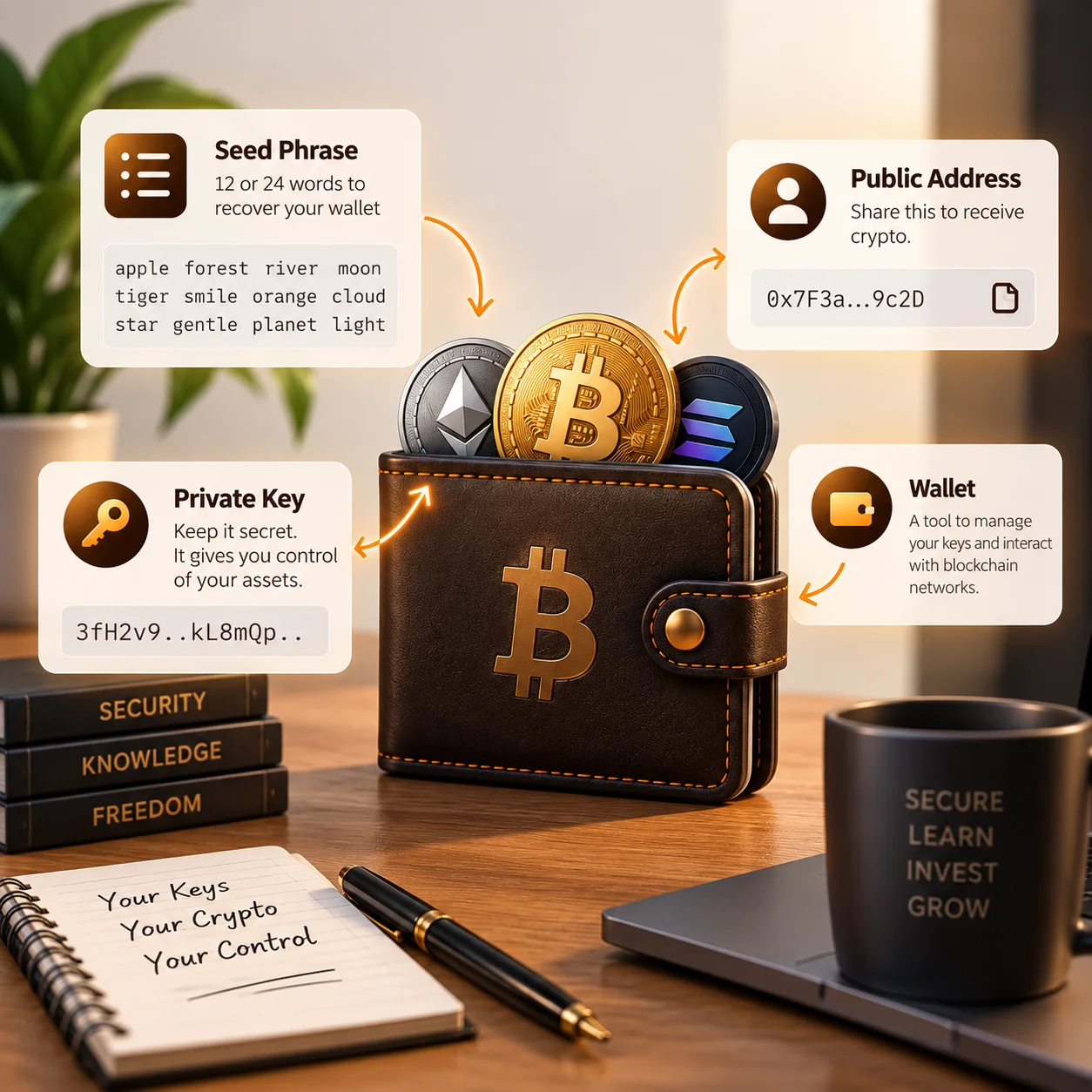
A crypto wallet is a tool that helps users manage the information required to interact with blockchain networks and digital assets.
Wallets are commonly associated with addresses and cryptographic keys. The wallet itself does not simply work like a physical wallet holding coins.
Understanding the difference between a wallet, an address, a private key and a seed phrase is an important foundation for crypto security.
Crypto wallets can be designed in different ways depending on how users access and protect their keys.
A wallet application that allows users to interact with blockchain networks through a computer, browser or mobile device.
A dedicated physical device designed to provide an additional layer of protection for sensitive cryptographic information.
A service where another provider manages the private-key infrastructure on behalf of the user.
These terms appear frequently when learning about crypto wallets and security.
An address can generally be shared with others when receiving compatible digital assets.
Private cryptographic information that may authorize transactions or other actions involving assets.
A recovery phrase that can be used by compatible wallet systems to restore access to wallet information.
A wallet provides the tools required for a user to interact with a blockchain network.
The user specifies the destination address and the amount involved in the transaction.
The wallet uses the relevant cryptographic information to authorize the transaction.
The transaction is submitted to the relevant blockchain network for processing and confirmation.
Wallet security starts with understanding which information can be shared and which information must remain private.
Good security practices can reduce common risks when interacting with digital assets.
Keep recovery information private and avoid entering it into unknown websites or applications.
Carefully check destination information before confirming transactions.
Be cautious with unexpected links, messages and requests for wallet information.
Use trusted wallet software and keep supported applications and devices updated.
Continue learning about crypto security, scams, wallets, blockchain and practical digital asset concepts.
Explore Learning Center →